
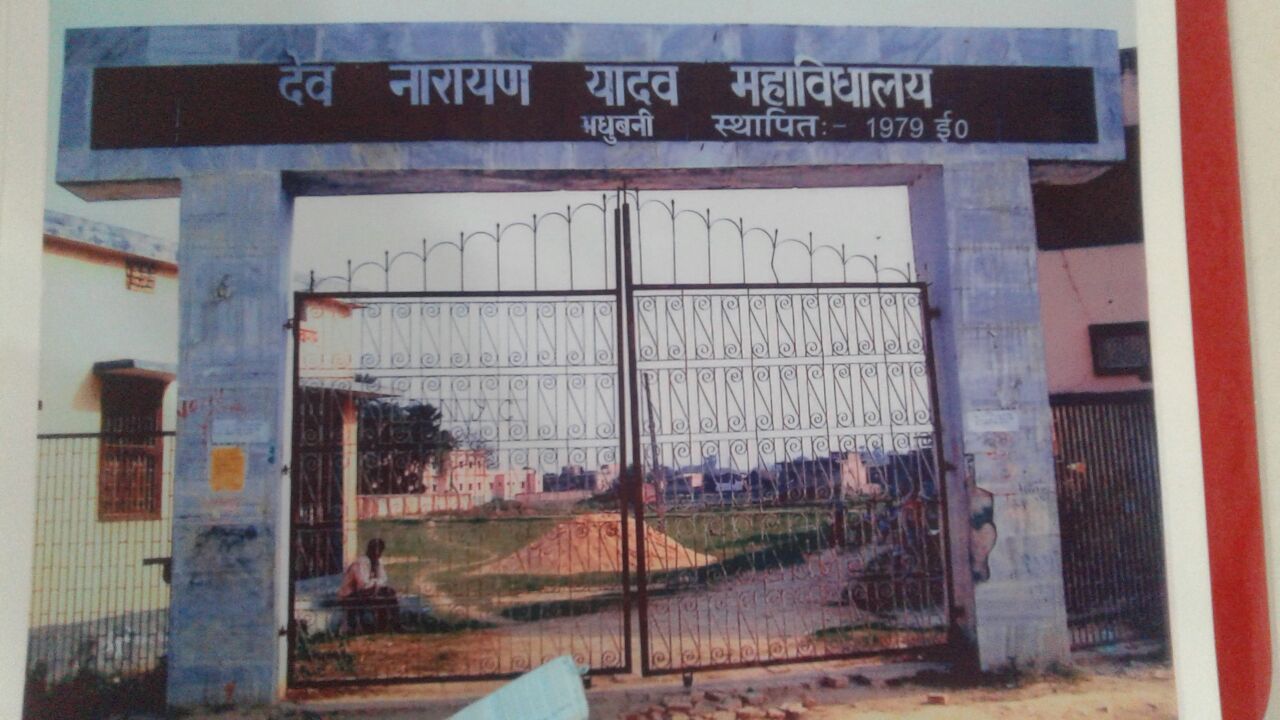
College At a Glance
Dev Narayan Yadav College, Madhubani was established in 1979 as a co-educational institution. The college is a constituent unit of L.N. Mithila University, Darbhanga, and serves students from Madhubani town and the surrounding rural areas of Bihar.
The college aims to "facilitate accessible and affordable quality education that leverages students with scholarly and professional skills, moral principles and global perspective."
The college offers undergraduate programmes in two broad streams — Faculty of Arts (B.A.) and Faculty of Science (B.Sc.) — with 16 departments across both faculties. The campus spans approximately 7 acres and houses a well-stocked library of 23,000+ books and journals.
SWOC Analysis of the Institution
Strengths • Weaknesses • Opportunities • Challenges
Strengths
- Constituent college of L.N. Mithila University
- 10 of 16 faculty hold Ph.D.; 1 holds M.Phil.
- Six faculty members completed Minor Research Projects
- Modern teaching tools — LCD projectors, Smart Boards, Internet
- Faculty participation in seminars and workshops
- Regular internal student evaluations
- Transparent admission procedures
- Strong academic and extracurricular records
- Disciplined campus environment
- Well-stocked library with research journals
- NSS programmes for social commitment
- Women empowerment and skill enhancement initiatives
- Scholarship opportunities for students
- Programmes promoting human values and national integration
Weaknesses
- No new teacher appointments in 10 years
- 31 of 46 teaching positions vacant
- Insufficient technical and administrative staff
- Limited infrastructure — classrooms, labs, and administrative spaces
- Minimal alumni support and engagement
Opportunities
- IT and skill enhancement training programmes
- Potential for post-graduate and research programmes
- Community development through women’s education initiatives
Challenges
- Regional educational, social, and economic constraints
- Student knowledge gaps and poor foundational schooling
- Limited alumni engagement
- First-generation learner population with minimal parental support
- Insufficient extracurricular development opportunities
- Underutilised course feedback mechanisms